
Reagan County VINE Coverage
Texas uses VINE through VINELink for status information and event notifications supplied by participating custodial agencies. Begin at the official Texas VINE entry point. Coverage depends on the agency and the data it sends. A county-jail record and a TDCJ record may not have the same fields, update time, or history.
Reagan County's current Kologik roster includes a “Register for release notification” route toward VINELink for a visible custody entry. That link is most useful before the current entry disappears, because Reagan disables public roster history. The connection supports registration on a named record. It does not prove that every local booking will remain searchable in VINE after release.
Federal custody sits outside this state channel. BOP uses its inmate locator, ICE uses its Online Detainee Locator, and federal victim notification may use DOJ VNS. A county transfer to one of those authorities should be followed in the receiving system rather than treated as a Texas VINE community release.
VINE also differs from the Texas DPS Public Sex Offender Registry. The registry applies only to people with a legal duty to register and may remain active after a sentence ends. It is not a parole list, a jail roster, or a general record of all people released in Reagan County.
Search Reagan County VINE Records
Search one person rather than browsing for a countywide release list. Names can be shared, misspelled, or entered with different forms. Use an ID when available and compare age or date of birth, agency, and the custody event before accepting a match. A person who is absent under one spelling may appear under another.
- Open Texas VINE, accept the displayed terms, and choose the person or offender custody search.
- Select Texas and the relevant agency when the interface offers an agency filter.
- Enter the full name and available ID. Try a spelling variant if the first search returns no sound match.
- Narrow with age or date of birth where available. Compare identifiers, not just the name.
- Open the matching record and read its current status plus the most recent custody event.
The Reagan County released inmates search path explains how to combine VINE with the sheriff record, court disposition, TDCJ, and federal systems. VINE should stay tied to the agency shown on the selected record.
Read Reagan County VINE Events
A result such as “released” or “out of custody,” paired with an event date, corroborates that the supplying agency reported that event. It does not establish that the criminal case ended, that no warrant exists, or that another agency did not take custody. “Transfer” is especially important. It marks movement between custodians, not release to the community.
| VINE item | How to interpret it |
|---|---|
| Name and offender or custody ID | Helps connect the result to the correct person and agency record. |
| Agency or facility | Identifies which custodian supplied the status and must confirm it. |
| Current custody status | States the latest condition reported to VINE, subject to update timing. |
| Custody event and date | May report release, transfer, or another change and when it was posted. |
| Notification choices | Shows which delivery channels and events are offered on that record. |
The Texas VINE person-search screen demonstrates the state search entry used for these fields.
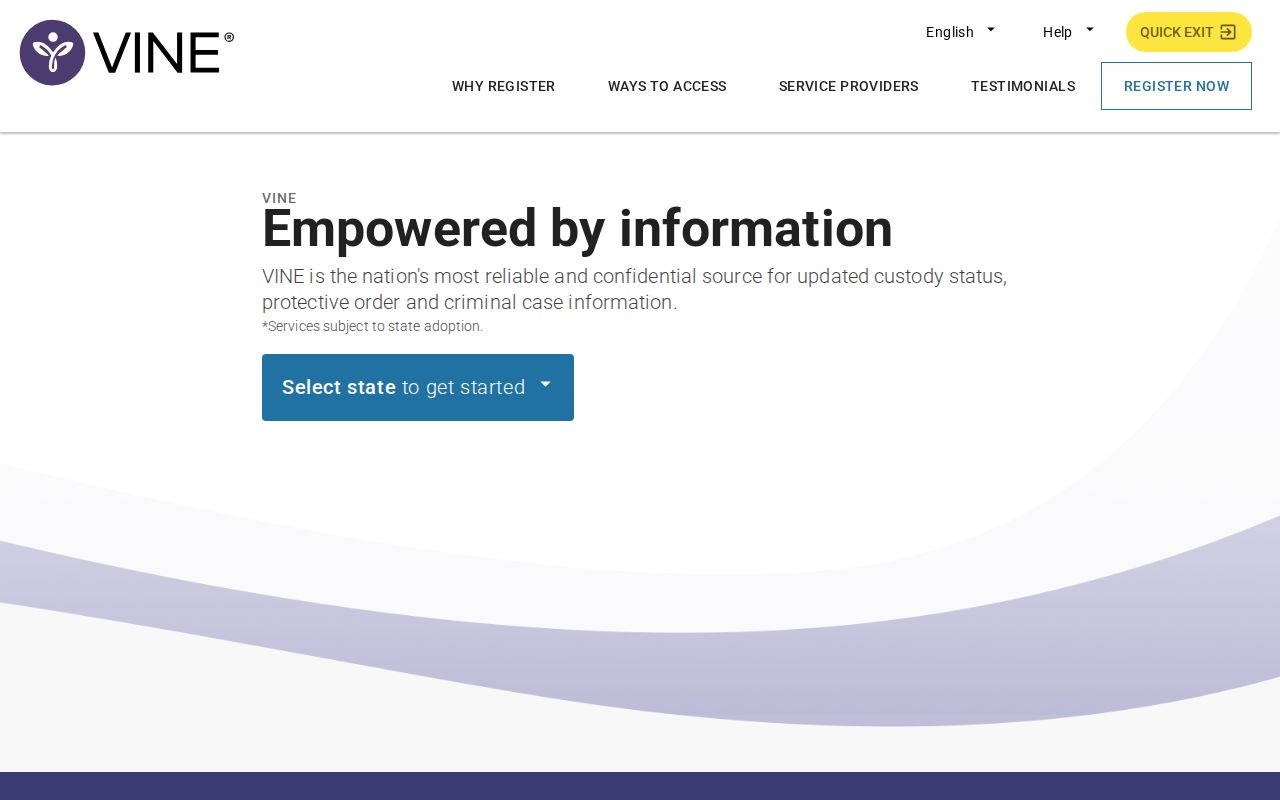
The screen is a starting point for one-person verification. A live result still needs identity checks and agency confirmation.
Register Reagan County Release Alerts
Register from the exact matched record. Viewing a result alone does not create an alert. The interface may offer phone, text, email, or an app/account channel, and it may let the user choose among reported events. Available choices can vary by record and agency. Select only what the live form offers.
- Choose “Register” or “Sign Up for Notifications” on the matching custody record.
- Select the offered channel and event, including release when that choice appears.
- Enter the phone number, email address, text destination, or account details requested.
- For telephone alerts, create the requested four-digit PIN. Use it during an automated call to acknowledge the event and stop repeat calls.
- Complete any email link, text code, or account confirmation. Save the registration confirmation and update contact details after a change.
The telephone PIN is not an inmate identifier. Email, text, or app registration may use a link or code instead, so it is inaccurate to say every channel requires a PIN. Keep the confirmation. Return to the record when the delivery destination must be changed or an alert canceled.
Choose contact routes that can be monitored. A changed telephone number or a full email inbox can prevent timely delivery. Registration details should be updated whenever they change. If an expected alert does not arrive, search the record again and contact the custodian rather than concluding that the person stayed in custody.
Confirm Reagan County VINE Releases
VINE warns users not to rely on notification alone for safety. The same safeguard improves factual accuracy. Data rests on agency participation and update timing. A released record may not remain searchable forever. No match may result from spelling, a different custodian, delay, sealed or protected information, or nonparticipation.
For Reagan County jail custody, use the Sheriff's Jail Services contact and ask whether the event was community release or transfer, then request the booking/release sheet. If TDCJ supplied the record, use TDCJ inmate information channels. Its public search is limited to people currently incarcerated in a TDCJ facility, so a former prisoner's actual release date, type, or certificate may require direct state records contact.
Court status is separate. A release alert does not prove dismissal, acquittal, sentence completion, or the absence of another case. Obtain the docket and signed judgment or order from the proper clerk when the legal outcome matters.
The Reagan County/112th District Clerk combines county and district clerk duties. That office can identify the proper criminal file and provide the signed document that addresses bond, dismissal, judgment, or another court action. The sheriff still supplies the physical release or transfer time. Preserving both records avoids turning a custody notice into an unsupported claim about case outcome.
Reagan VINE Transfer Warnings
Reagan County's jail holds people awaiting trial, serving local terms, awaiting transfer, or held for another authority. Removal from local custody can send a person to TDCJ, another county, federal custody, or immigration detention. VINE may report the local event without providing the full receiving-system history.
| Reported event | Next source | Required confirmation |
|---|---|---|
| Reagan jail release | Sheriff records and the court | Release type, time, authority, and any destination |
| Transfer to TDCJ | TDCJ inmate information and records | State acceptance, current facility, and later actual release |
| Federal handoff | USMS or BOP, based on case stage | Receiving custody and later BOP release status if applicable |
| ICE transfer | ICE locator and ERO information | Immigration custody status, not county community release |
A release from physical confinement to parole is also not discharge. Parole continues the sentence under supervision. A discharge generally marks completion of the sentence and supervision duty, subject to any separate case or registry requirement.
For TDCJ matters, “projected release date,” “parole eligibility date,” and “maximum sentence date” are separate values. None is an alert that physical release happened. A favorable parole vote also begins processing rather than proving departure. Wait for the reported event, then seek the actual release date, type, or certificate from TDCJ when precise confirmation is needed.
Texas Victim Notification Differs
TDCJ Victim Services operates a distinct enrolled notification channel. Its victim notification request process is not a general public former-inmate locator. Eligibility, enrollment, and the events offered belong to that program. Do not confuse it with a routine VINELink name search.
Federal cases may use DOJ's Victim Notification System rather than Texas VINE. Likewise, the Texas DPS Public Sex Offender Registry is a separate post-release system limited to people with a legal registration duty. Registry presence does not prove parole, and most released people do not appear there.
Each channel answers a narrow question. VINE reports supplied custody events and sends chosen alerts. Victim-services programs serve enrolled participants. Registries reflect a statutory duty. The originating jail, corrections agency, or court remains the place to prove release and legal status.
Notification redundancy is useful. Keep VINE registration active, retain its confirmation, and maintain direct agency contact when timing or safety matters. If sources conflict, record what each one says and when it was checked. The newest alert may still trail the custodian's internal event, while an older screenshot may remain visible after the situation changes.
Use the live agency record for urgent decisions. VINE itself advises against relying only on an automated notice for safety. A trusted plan can include saved agency numbers, an alternate contact method, and a fresh status check. If the person moves between systems, registration on one record may not carry into the next system. Review the receiving agency's notification options after the transfer is confirmed.
Keep personal contact data accurate and limit it to the registration fields requested. A custody alert is not a broad case file. For the reason behind release, turn to the sheriff's release authority field and the court's signed order. For state supervision after prison, contact TDCJ Parole Division. Probation is court-ordered community supervision and belongs to the CSCD named in the order, not to a VINE custody event.
Old notifications should be read in time order. A release event can be followed by a new arrest, a transfer, or entry into another custodian's system. The earlier alert remains a record of what one agency reported at that point, but it does not establish current status. Run a new search and ask the present custodian when facts may have changed.
Public Record Search
Sponsored Results